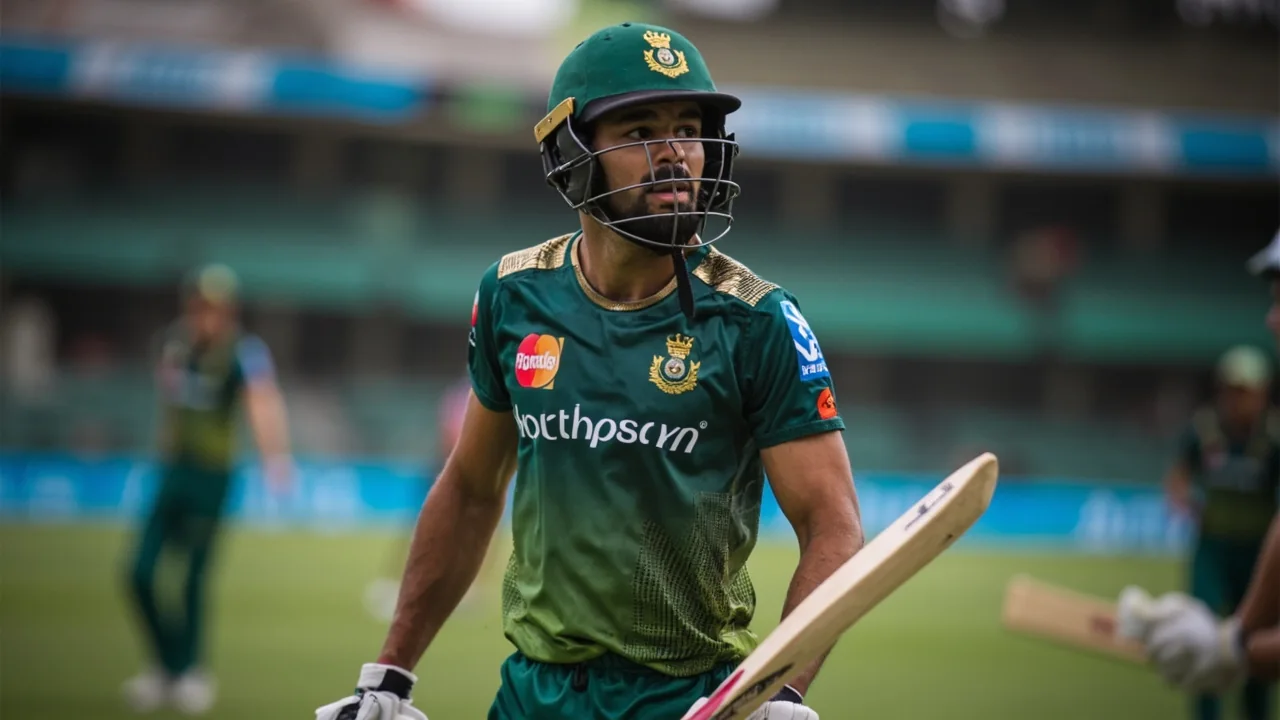
Match 24 of The Hundred Men's 2026 sends Birmingham Phoenix (BPH) to Edgbaston to host Sunrisers Leeds (SRL) on Friday, 7 August 2026, with first ball scheduled for 11:00 PM IST and broadcast on the Star Sports Network and JioHotstar. Phoenix sit bottom of the table with one win from five; Sunrisers Leeds sit fifth with three from five after a 37-run win over London Spirit. CricTracker's fantasy desk has named Mitchell Marsh captain pick, Joe Clarke vice-captain, Matty Potts and Will Smeed on the avoid list, and the Edgbaston surface as a 70% batting track with an average first-innings score of 170 and 60% pace / 40% spin assistance. Read those facts the way a bonus-credit user has to read them — through the offer's eligibility window, the qualifying-contest list, and the captain-multiplier treatment the offer's small print actually applies.
Below is a walk-through of what the verified match facts mean for a fantasy entry funded by a welcome credit or bonus code. No live offer number, contest pool, or platform's specific playthrough rule is named; each example is clearly labelled hypothetical. Confirm every detail on your own device, under your own verified account, before any credit is treated as a budget line. The broader framework for reading welcome credits, expiry windows and withdrawal terms lives on the bonus code reading guide — use it alongside this briefing, never in place of it.
What this briefing covers
- The verified Match 24 facts that change a captain decision
- Why the Edgbaston pitch profile matters to a bonus-funded XI
- Mitchell Marsh as captain pick: what the offer's multiplier treatment actually means
- Joe Clarke as vice-captain: where the wicketkeeper-batter slotting pays off
- The avoid list (Matty Potts and Will Smeed) and why a credit user has to read it twice
- The probable XIs and the squad-cut window a credit forces you into
- Weather, overcast 19.7 °C and 54% humidity: what it changes about lineup timing
- A five-step match-night walk that fits a credit-funded entry
- The eligibility questions to ask the platform before lock-in
The verified Match 24 facts that change a captain decision
Six verified facts about Friday's fixture do the work that a fantasy briefing normally does. Each one has to be on the page the reader checks before any lineup is built, and each one has a credit-specific angle the standard fantasy preview skips.
The fixture is Match 24 of The Hundred Men's 2026. The Hundred format is a 100-ball-per-side competition, so captain multipliers in most fantasy platforms apply to a smaller, denser set of deliveries than a T20 league. Captain picks carry a higher per-ball weight in this format than they do in an IPL or BBL XI; the offer's captain-multiplier treatment — whether 2x, 2.5x or 3x — is therefore the single line in the small print that determines whether a captain pick is worth a free entry or a paid entry.
The venue is Edgbaston, Birmingham, with first ball at 11:00 PM IST and broadcast on the Star Sports Network and JioHotstar. Edgbaston is one of three English Test grounds staging The Hundred this season; it has hosted shorter-format cricket continuously through the summer and the square has had time to settle. The Hundred's evening-window scheduling means dew is a routine variable for the chasing side; the offer's "match starts" wording may or may not adjust for a shortened or rain-truncated game, and a credit user has to check whether a DLS result still counts toward the qualifying-contest list.
The table position is asymmetric. Phoenix have won one of five and sit bottom with four points; Sunrisers Leeds have won three of five and sit fifth with twelve points after a 37-run win over London Spirit. The Hundred's group stage still has room for either side to climb, and that asymmetry shifts captain risk — a captain pick on the chasing favourite (SRL) carries different variance than a captain pick on the desperate home side (BPH). A bonus-credit user with a small qualifying pool should treat the table gap as a tie-break for captain selection, not as a reason to chase ceiling.
Phoenix's previous outing was a seven-wicket defeat to Trent Rockets. That single result is not enough to read form, but the seven-wicket margin tells the reader the chase finished early — which means the captain pick on the losing side had limited deliveries to score against. A bonus-credit user who entered a free contest on Phoenix's previous fixture has a clean read on what "short chase" did to their captain pick's points; that read is the baseline for Friday's decision.
A captain thesis in The Hundred has to fit the format's shorter delivery count — credit-funded entries amplify that because the offer's multiplier treatment is the only place that decision compounds.
Why the Edgbaston pitch profile matters to a bonus-funded XI
The Edgbaston surface is rated 70% batting, with 60% pace-bowling assistance and 40% spin. The average first-innings score on this square through The Hundred cycle sits at 170 — a useful reference figure, not a target. A 170 average across 100 balls is a run-rate near 8.5 per over once the powerplay is finished, which is high for white-ball cricket but normal for The Hundred's boundary-heavy weighting. The 70% batting rating is the headline number to read; the pace-vs-spin split is the secondary number.
For a bonus-credit user, the pitch profile changes three decisions. First, it shifts captain pick toward the batting side of the XI — on a 70% batting track, the captain pick should be a batter, not an all-rounder or a bowler. Second, it narrows the bowler pool — on a 60% pace / 40% spin split, four pace options and one specialist spinner is the working shape, not three-and-two. Third, it changes the offer's qualifying-contest list treatment: some welcome credits exclude contests whose projected total exceeds a platform-set threshold, and 170 as an average can sit on either side of that threshold depending on the platform. Read the offer page before lock-in, not after.
Suppose a hypothetical welcome credit excludes contests with a projected total above 175. Match 24's average sits at 170, comfortably below. But "average" is not "projected." If Phoenix are inserted as the chasing side under lights, dew and a short boundary can lift the projected total above 175 by the second innings. The offer's qualifying-contest filter applies at entry time, not at toss time — meaning the reader commits before they know which side is chasing. The fix is to check the offer page's qualifying-contest list against the platform's projected-total filter before submitting the lineup, not after the toss.
Mitchell Marsh as captain pick: what the offer's multiplier treatment actually means
CricTracker has named Mitchell Marsh as the captain pick. Marsh sits at the top of the run charts in The Hundred Men's 2026 with 290 runs in five innings, an average of 58.00 and a strike rate of 182.38, including three half-centuries. He leads Sunrisers Leeds and bats in the top order; his role security on Friday is as high as any player on either squad sheet.
For a bonus-credit user, the relevant question is not whether Marsh is the right captain — that is the fantasy call the standard previews have already made. The relevant question is whether the welcome credit's captain-multiplier treatment makes the same pick the right call for a credit-funded entry as for a cash entry. Most platforms run one of three captain multipliers: 2x, 2.5x or 3x. The 2x treatment makes a captain pick roughly equivalent to a normal pick in expected value, leaning slightly toward ceiling; the 3x treatment makes the captain pick the single highest-variance decision in the XI. A 2.5x multiplier is the most common middle setting.
Suppose a hypothetical welcome credit applies the captain pick at 2x points. Marsh's expected points on a 70% batting Edgbaston track are around 50–70 in The Hundred format. At 2x, the captain multiplier adds another 50–70 to his tally. The net swing on the captain pick is therefore 50–70 points, against a contest entry that may pay out the top 20% of the field. A 50–70-point swing is the difference between finishing in the top 20% and finishing in the top 5% on most platforms — which is the difference between a credit that clears its playthrough and a credit that does not.
Suppose instead the same hypothetical credit applies the captain pick at 3x. The captain pick now swings 100–140 points against the next-best pick. That is a contest-deciding swing in any league size, and the variance cost of being wrong doubles. The credit's headline is the same — the offer still reads as "₹500 welcome credit · 3x playthrough" — but the realised cash at the end of the contest depends almost entirely on whether the captain pick landed. A credit-funded entry should treat a 3x captain multiplier as a higher-variance bet than the same captain pick on a cash entry, because the credit's small print makes the contest exit faster than a cash entry's bankroll can absorb a miss.
Reading the captain multiplier line
Before any credit-funded entry, copy the offer's captain-multiplier line and the offer's last-updated date into a note. Then open the platform's own points-rules page on the platform's own website (not inside the app). Confirm the captain multiplier is the same figure in both places. If the two numbers disagree, the credit's headline is built on a points rule the reader cannot reproduce — decline the entry, screenshot the discrepancy, and file a customer-care ticket before lock-in. A credit funded against an unverifiable captain multiplier is a marketing entry, not a budget line.
Joe Clarke as vice-captain: where the wicketkeeper-batter slotting pays off
CricTracker has named Joe Clarke the vice-captain pick. Clarke is the Phoenix wicketkeeper-batter, with 192 runs in five innings at an average of 38.40 and two half-centuries so far this season. The Hundred's format gives a wicketkeeper-batter a points bonus on dismissals behind the stumps in addition to batting points, and most platforms layer a small fielding-points bonus on top. A vice-captain pick who is also a wicketkeeper is therefore earning points from three sources on the same delivery: batting, dismissal and a possible catching stumping.
For a credit-funded entry, the vice-captain slot is where the offer's eligibility list can quietly exclude a player. Some welcome credits exclude players flagged as "all-format" internationals, players already selected in another active contest on the same account, or players whose selection percentage exceeds a platform-set threshold. Clarke is a domestic wicketkeeper-batter on Phoenix, not an all-format international, but his selection percentage on a free contest pool will be high because CricTracker has named him vice-captain — meaning the offer's selection-percentage filter, if any, may have already excluded him before lock-in. Verify on the platform's own player-list screen, not on the splash tile.
Suppose a hypothetical welcome credit excludes players whose selection percentage exceeds 30% in any active contest on the platform. CricTracker's vice-captain pick on a Hundred preview typically lifts a player's selection percentage above 30% inside the first hour after publication. If the reader entered their lineup in the second hour after publication, Clarke may already be excluded by the offer's small print — and the contest still scores him, but the contest entry does not credit the wicketkeeper-batter bonus. The fix is to lock the lineup before the preview's selection-percentage bump arrives, and to confirm Clarke is on the offer's eligible-player list at the moment of submission.
The avoid list (Matty Potts and Will Smeed) and why a credit user has to read it twice
CricTracker's avoid list names Matty Potts (SRL, bowler) and Will Smeed (BPH, batter). The avoid list is a fantasy-desk recommendation, not a platform rule — players on the avoid list are still eligible for selection in any contest on the platform. The list is a "do not pick" signal based on role, form and matchup. For a credit-funded entry, the avoid list matters for a second reason: if a credit-funded entry happens to include a player from the avoid list, the contest's variance rises without a compensating upside, because the avoid-list pick is the player the fantasy desk has flagged as the most likely to underperform.
The first read of the avoid list is the standard fantasy read: do not pick Potts or Smeed. The second read, specific to a credit-funded entry, is whether the offer's small print treats an avoid-list pick as an excluded player. Most platforms do not exclude avoid-list picks — they are simply picks the desk does not recommend. But some welcome credits exclude players flagged as "injury risk" or "doubtful for selection" on the platform's own injury page, and a player on the avoid list can overlap with the injury list. Cross-reference the avoid list with the platform's injury page before lock-in; the offer's small print applies to the platform's injury page, not to CricTracker's avoid list.
The probable XIs and the squad-cut window a credit forces you into
Both sides have announced probable XIs. Phoenix: D Ferreira (C), Will Smeed, LJ Evans, R Ahmed, Mitchell Owen, S Mahmood, Usman Tariq, CP Wood, SR Dickson, Ben Dwarshuis, JJ Weatherley, with a bench of JM Clarke, Jacob Bethell, Ethan Brookes, Scott Currie, JA Thompson, Mustafizur Rahman, M Montgomery, TG Helm. Sunrisers Leeds: RD Rickelton, Zak Crawley (C), HC Brook, BA Carse, DW Lawrence, MR Marsh, Nathan Ellis, Abrar Ahmed, MJ Potts, RJW Topley, Matthew Revis, with a bench of TP Alsop, Thomas Lawes, Benny Howell, EG Barnard, LA Patterson-White, CW Allison.
A probable XI is not a confirmed XI. The Hundred's squad-cut window closes one hour before first ball, but squad changes can arrive as late as the toss in cases of late fitness clearances. For a credit-funded entry, the squad-cut window matters because most welcome credits lock the lineup at the moment of submission, not at the toss. A reader who submits their lineup using the probable XI and then sees a late squad change at the toss has entered a contest with a player no longer in the eleven — and most platforms do not refund contest entries on the basis of late squad changes.
The defence is to delay lineup submission until the latest possible moment the offer's qualifying window allows. Most platforms set the contest-entry cutoff fifteen minutes before first ball. That window is also the window in which late squad changes are announced. The reader's discipline is to hold the lineup, monitor both teams' social feeds, and submit only after the toss when the playing XIs are confirmed. A credit-funded entry that waits for the toss costs nothing in expected value but recovers the variance from a late squad change.

The squad-cut window is the same window in which the offer's qualifying-contest list can change. Hold the lineup until the toss; submit once the playing XIs are confirmed and the offer page has settled.
Weather, overcast 19.7 °C and 54% humidity: what it changes about lineup timing
The verified forecast at Edgbaston is overcast clouds, 19.7 °C and 54% humidity. Overcast conditions in evening Hundred cricket at English grounds usually mean early swing for the pace bowlers and a small reduction in batting run-rate for the first six balls of each innings. The 19.7 °C temperature is mild for an English August evening; the 54% humidity is moderate and unlikely to produce significant dew in the first innings. For a credit-funded entry, the weather changes three decisions.
First, the captain pick leans marginally toward the bowling side under overcast conditions — Marsh remains the right captain pick, but a credit-funded entry with a 3x captain multiplier has to weight the early-swing probability more heavily than a cash entry would. Second, the bowling points allocation under overcast conditions tilts toward the new-ball bowlers — Potts is on the avoid list, but Nathan Ellis and RJW Topley (both in the SRL XI) are pace bowlers who benefit from swing. Third, the offer's qualifying-contest list may include a separate weather-adjusted contest category on some platforms; verify the offer page lists the same contest shape under "overcast" or "evening" categories as under "day" categories, and decline the entry if the offer's qualifying list shifts between the two.
Suppose a hypothetical welcome credit excludes contests flagged "rain-affected" on the platform's own weather page. The forecast at Edgbaston is overcast but not rain-affected, so the contest is eligible. If the forecast updates to a rain probability above 30% before lock-in, the contest's eligibility shifts and the entry may not credit. The reader's defence is to check the platform's weather page at the same moment the lineup is submitted — not at the moment the lineup is built. The two checks must be simultaneous.
A five-step match-night walk that fits a credit-funded entry
Five steps, in order, before any credit-funded entry is submitted on Match 24. Each step is a separate decision; if any step cannot be completed in plain language from the reader's device or the platform's published documents, the entry is not ready.
- Confirm eligibility on the platform's own website. Open the platform's eligibility page, not the splash tile. Confirm Phoenix and Sunrisers Leeds are listed as active teams; confirm the reader's state is on the platform's accepted-states list; confirm the offer page lists Match 24 as a qualifying fixture. If any of the three is missing, decline the entry, request a deposit refund inside the pending window, and remove the app until the platform publishes a reconciliation.
- Read the offer's captain-multiplier treatment. Open the platform's points-rules page on the platform's own website. Confirm the captain multiplier is the same figure the splash tile shows. Note the multiplier — 2x, 2.5x or 3x — in the same notepad as the headline number. If the multiplier is 3x, hold the lineup an extra fifteen minutes and re-check Marsh's selection percentage before submission.
- Check the offer's qualifying-contest list against Match 24. Open the offer page and the contest list side by side. Confirm Match 24's contest shape (free entry, paid entry, mega contest, head-to-head) is on the qualifying list. If the offer excludes mega contests, decline any mega-contest entry on Friday even if the lineup is ready. If the offer excludes contests with a projected total above a platform-set threshold, decline entries on contests whose projected total exceeds the threshold by toss time.
- Hold the lineup until the toss. Build the lineup using the probable XIs but do not submit. Monitor both teams' social feeds and the platform's injury page until the toss confirms the playing XIs. Re-check the avoid list (Potts and Smeed) against the confirmed playing XIs; if either player is unexpectedly included, treat the avoid-list signal as still binding and find a replacement from the bench.
- Submit, then record. Submit the lineup fifteen minutes before first ball. Screenshot the lineup, the offer page and the platform's eligibility page at the moment of submission. Note the timestamp on each screenshot. The screenshots are the evidence the reader can present if the platform later disputes the credit's qualifying treatment. Confirm every detail on the reader's own device, under the reader's own verified account, before any credit is treated as a budget line.
If any of the five steps cannot be completed from the device or from documents the platform publishes on its own website, the credit is non-verifiable for Match 24. The headline number on the splash tile is a marketing figure, not a budget line. Decline the entry, decline the contest, and return to the bonus-code reading framework before any further credit is claimed on this fixture or the next one.
The eligibility questions to ask the platform before lock-in
Three questions have to be answered in writing from the platform's customer-care channel before any credit-funded entry on Match 24. The questions are not about the match — they are about the credit's qualifying treatment, which is the only part of the entry the platform controls independently of the on-field result.
First, does the offer's qualifying-contest list treat Match 24 as a single fixture or as part of a multi-fixture bundle? Some welcome credits count only entries on multi-fixture bundles toward the playthrough multiplier; a single-fixture entry on Match 24 would still credit, but would not count toward playthrough. The reader needs to know which treatment applies before lock-in.
Second, does the offer's captain-multiplier treatment apply to the vice-captain slot at half the multiplier, or does the offer replace the standard vice-captain treatment with its own rule? Some welcome credits replace the platform's default 1.5x vice-captain treatment with a 1x treatment, meaning Joe Clarke's vice-captain points arrive at half the expected value. A credit-funded entry that builds its thesis around Clarke's vice-captain weighting may be over-counting by 30–50%.
Third, does the offer's payout-cap on bonus-converted balances apply per contest or per credit lifecycle? Some welcome credits cap the total withdrawable amount from bonus-funded entries at a fixed figure across the credit's lifetime; other welcome credits cap the withdrawal per contest. The treatment changes whether a contest win on Match 24 can be withdrawn immediately or only at the end of the credit's lifecycle. Both treatments are legitimate; the reader needs to know which applies before claiming the win as realised cash.
What to watch after first ball
Three signals after first ball change the credit-funded entry's expected value. First, the early-swing window — if Mitchell Marsh or Zak Crawley survive the new-ball overs without losing a wicket, the captain pick's points base rises and the credit's expected value follows. Second, the dew window — if dew arrives during the second innings, the chase-side bowlers lose grip and the run-rate lifts; the credit-funded entry's batting-side picks gain ceiling in that window. Third, the DLS window — if rain arrives mid-innings and a DLS-adjusted target is set, the credit's qualifying-contest treatment may shift to a "rain-affected" category that some offers exclude; the reader should monitor the platform's weather page and the offer page simultaneously after first ball.
Friday's fixture is also the lead-in to Match 25 on Saturday and the back end of the group stage through the following week. A credit-funded entry on Match 24 is one of three or four fixtures a reader can enter under the same credit before the credit's expiry window closes. The five-step walk above has to be repeated for every fixture the credit covers, not just for Match 24. A credit that clears its playthrough on a single fixture is not the same as a credit that clears its playthrough across the full window — and the offer's qualifying-contest list can change between fixtures, not just within a single one.
Methodology and limits
This briefing uses the verified source dossier from CricTracker's fantasy preview of Match 24 of The Hundred Men's 2026: the fixture, the venue, the broadcast partners, the table positions, the recent form, the captain and vice-captain picks, the avoid list, the probable XIs, the Edgbaston pitch profile, the weather forecast and the publication context. Hypothetical examples about welcome credits, captain multipliers, qualifying-contest lists and payout-caps are illustrative; no live offer number, platform name, playthrough rule, or payout schedule is named or implied. Verify every detail on the reader's own device, under the reader's own verified account, before any credit is treated as a budget line.
The framing is the bonus-code reading lens applied to a verified fantasy fixture. The match facts are real; the credit-side examples are teaching tools. The reader's responsibility is to confirm both before lock-in. The MeitY framework on online gaming and the Public Gambling Act, 1867 with state amendments still govern the legal landscape, and an offer marketed to a national audience is not automatically available in every state. Read the legality notes linked in the footer before any deposit.
Cross-read on credit reading
The verified match facts above are the fantasy side. The credit side — eligibility, qualifying contests, captain multiplier, payout cap — lives on the bonus-code reading guide. Walk that guide alongside this briefing before any entry is submitted.
18+ only. Please play responsibly.
Frequently asked questions
Is the Mitchell Marsh captain pick a platform rule or a fantasy-desk recommendation?
It is a CricTracker fantasy-desk recommendation, not a platform rule. The Hundred's fantasy contests on every platform allow any player in the confirmed playing XIs to be selected as captain. The captain pick is the desk's view of the highest-ceiling player in the fixture; it is not a contractual obligation on the platform.
What does the Edgbaston 70% batting pitch rating actually mean for a captain pick?
It is the platform's own surface rating, not a target run-rate. A 70% batting track means seven of ten pitches of this length and square preparation behave as batting-friendly surfaces. For a captain pick, it shifts the decision toward the batting side of the XI rather than the bowling side; the actual scoring still depends on the toss, the dew window and the new-ball swing in the first six balls.
How does a welcome credit treat a captain pick differently from a cash entry?
Only through the offer's small print. Most platforms apply the same captain multiplier to a credit-funded entry as to a cash entry. The variance cost is different because the credit's qualifying window and playthrough rule force the entry to clear faster than a cash entry's bankroll can absorb a miss. A 3x captain multiplier on a credit-funded entry is therefore higher-variance than the same 3x captain multiplier on a cash entry.
What if the probable XI changes after I have submitted my lineup?
Most platforms do not refund contest entries on the basis of late squad changes. The reader's defence is to hold the lineup until the toss and submit only after the playing XIs are confirmed. A credit-funded entry that waits for the toss costs nothing in expected value but recovers the variance from a late squad change.
What if the avoid-list pick (Potts or Smeed) is in the confirmed playing XI?
Treat the avoid-list signal as still binding and find a replacement from the bench. The avoid list is a fantasy-desk recommendation based on role, form and matchup; the desk's view does not change because the player is in the playing XI. Replace the avoid-list pick with the bench player who has the highest expected role security under the offer's qualifying treatment.
Does this briefing apply to other Hundred fixtures this week?
Yes, but each fixture has its own probable XI, pitch profile, weather forecast and avoid list. The five-step walk above applies to every fixture; the verified facts change with each one. Re-read the source dossier for the specific fixture before re-running the walk; do not transfer the captain pick, the avoid list or the weather read from this briefing to a different match without re-checking.
What if my state is restricted?
Decline the entry. Do not use workarounds. The MeitY framework on online gaming and the Public Gambling Act, 1867 with state amendments still govern the legal landscape, and an offer marketed to a national audience is not automatically available in every state. Read the legality notes linked in the footer before any deposit.